

Work Shouldn’t Cost Your Life
It’s Time to Protect Illinois Workers from Extreme Temperatures
The Workplace Extreme Temperature Safety Act
Finally giving Illinois’ workers the protection they deserve.
Illinois workers are facing dangerous heat and cold on the job with no real protections in place.
For decades, workers fought to win a national heat safety standard, and we were finally on the verge of victory under the Biden administration. But when power changed hands, the Trump administration hamstrung every agency tasked with protecting workers.
As the Federal government abandons workers, Illinois has to step up and guarantee Illinois workers the safety protections they've been fighting for, keeping them safe from extreme temperatures that are only getting worse.
The Workplace Extreme Temperature Safety Act
About the Bill
Illinois workers have never had any standard protecting them from dangerous heat and cold on the job. It could be 110 degrees on the shop floor and there is no health or safety standard that’s going to protect you from fainting or dying on the job.
The Workplace Extreme Temperature Safety Act would change that by requiring employers to develop prevention plans, provide water, rest breaks, and protective equipment, and train workers to identify temperature-related health risks.
This policy is about setting common sense standards: rest breaks when temperatures climb above 90 degrees, insulated gloves when they drop below 10 degrees, and cool water on scorching hot days. It’s about making sure workers can blow the whistle when the conditions get dangerous, without fearing retaliation.
IN THE NEWS
New Push to Protect Illinois Workers From Extreme Cold After Subzero Week
CHICAGO - Days after a dangerous cold snap sent wind chills plunging to 32 degrees below zero across Illinois, state lawmakers are renewing their push for legislation that would protect workers forced to labor outside in extreme weather, saying last week's deep freeze exposed a glaring gap in workplace safety law.
What we know: The Workplace Extreme Temperature Safety Act, introduced by State Senator Robert Peters and State Representative Edgar Gonzalez Jr., would establish the first enforceable extreme temperature standards for Illinois workers.
Supporters say the bill is urgently needed after this week's arctic blast, when schools closed, transit shut down, and cities opened warming centers while thousands of workers still had to show up to load baggage on frozen tarmacs, deliver packages, and work in warehouses that felt like refrigerators.
THE BALL IS IN OUR COURT
NYC Mayor Mamdani Signs Executive Order Protecting Workers from Extreme Heat
What you should know:
As summer heats up, Mamdani administration takes bold, whole-of-government approach to keeping New Yorkers safe
Executive Order directs development of new safeguards for the 1.4 million New Yorkers who work outdoors
Multilingual guidance, agency heat illness prevention plans and new public health research ordered as part of sweeping action
NEW YORK — Today, Mayor Zohran Kwame Mamdani signed an Executive Order directing a whole-of-government response to protect workers from extreme heat — the first initiative of its kind in New York City history.
Chicago Sun Times
6 heat-related deaths in Cook County mark July as deadliest month in more than a decade
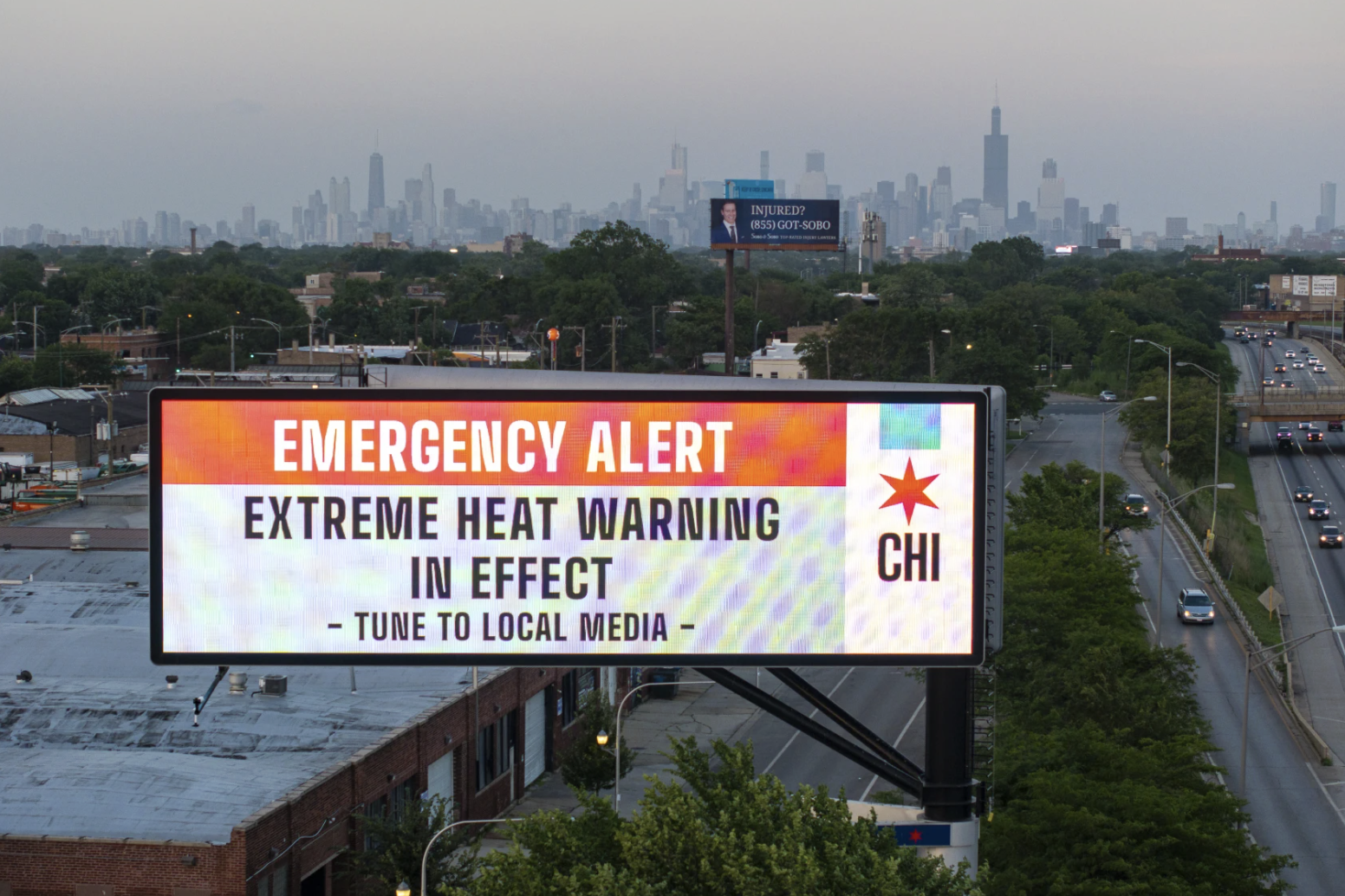
Six people in Cook County have died from heat-related causes in July so far, marking the deadliest stretch of extreme hot-weather deaths since at least 2015.
Victor Ferguson, 48, is the latest person identified who died in the heat wave this month. Ferguson died July 2 from heat stroke with ethanol intoxication as a secondary cause, according to new records from the Cook County medical examiner’s office.
Four of the six people who died were younger than 60. In all, six July deaths have been logged in Cook County so far, the high temperature ranging from 88 to 95 degrees on the day they either died or were hospitalized, according to an analysis of National Weather Service data by WBEZ and the Chicago Sun-Times. During that first week of July, heading into the Fourth of July weekend, Cook County was under an extreme heat warning.
Besides Ferguson, the others whose deaths have been attributed to the heat are Stephanie Rodriguez, 45; David Gonzalez, 44; Barbara Whigham, 71; Mike Rodriguez, 57; and Daniel Machnikowski, 69, according to the medical examiner’s office.
The Workplace Extreme Temperature Safety Act
What the Bill Does:
-
Sets specific temperature standards that trigger employer obligations at different thresholds for indoor and outdoor work.
-
Employers must develop written temperature illness prevention plans by January 1, 2028, with meaningful employee input, including those covered by a CBA, and annual updates.
-
Requires employers to implement heat and cold alert systems and establish emergency protocols for temperature-related illnesses. Mandates annual training for all employees on recognizing symptoms, understanding risk factors, and knowing their rights under the law.
-
Ensures workers have access to water, rest breaks, cooling/warming stations, and climate-controlled spaces to keep workers safe during periods of extreme temperature.
-
Creates strong anti-retaliation provisions with a rebuttable presumption for adverse actions taken against workers who exercise their rights.
-
Creates a strong enforcement regime through diversified oversight by agencies and other interested parties.
Workers Can’t Wait
"We weren't allowed to turn on the heat in freezing cars or the A/C in scorching ones. The only way we could cool off in summer was splashing ourselves with water from the hose we used to rinse cars. We couldn't even have coffee to stay warm in winter or cold water to stay hydrated in summer."
— Juan, Chicago
“When I was still teaching, students who were feeling a bit faint or weak were sent to the nurse’s office. When that was filled, they were sent to the library and eventually to the dean’s office, rooms that had air conditioning. Meanwhile other students and their teachers were required to tough it out. When I was in my 50s, I would get breathless with the 90+ temperatures in the classroom.”
— Sharon K., Former Educator, Westmont
“I do not want people’s lives to be at risk when doing farm work. This work is hard. It’s hard when the weather is nice, it’s worse when the weather isn’t ... No one should be at risk of dying simply so others can eat.”
— Anne B., Produce Buyer, Urbana
“As a landscaper who has had a close friend who died from heat stroke, I would really like to see regulations in place.”
— Kirsten C., Landscaper, Seymour
Coalition Members










Thank You
to our WETSA Bill Supporters
IL AFL-CIO
Roofers and Waterproofers Local 11
Laborers’ International Union - Midwest Region
Brotherhood of Locomotive Engineers and Trainmen (BLET)
International Union of Operating Engineers Local 150 (IUOE Local 150)
United Electrical, Radio, & Machine Workers of America (UE)
United Food & Commercial Workers Local 881 (UFCW Local 881)
Communications Workers of America (CWA)
Illinois Federation of Teachers (IFT)
National Safety Council
Citizen Action Illinois
Domestic Violence Outreach
University of Illinois Chicago School of Public Health
Jobs to Move America Midwest
Cook County Department of Public Health (CCDPH)
Asian Americans Advancing Justice Chicago
Illinois Trial Lawyers Association
The Resurrection Project
The People’s Lobby
Pilsen Alliance
UFCW local 1546
Partners District Council 14
Workers United CMRJB
Teamsters Joint Council 25
APWU Chicago Local 0001
Stay Engaged
Join our mailing list to stay engaged in our fight to protect Illinois works from extreme temperatures.